AI Image Recognition: Common Methods and Real-World Applications

In order to make this prediction, the machine has to first understand what it sees, then compare its image analysis to the knowledge obtained from previous training and, finally, make the prediction. As you can see, the image recognition process consists of a set of tasks, each of which should be addressed when building the ML model. Image recognition software is similar to machine learning tools, with a few distinct differences. Image recognition software is designed to support artificial intelligence and machine learning. The technology behind machine learning is programmed to be adaptable on its own and use historical data while it functions. Both software tools are capable of working with one another to improve sensors which improve interpretation for decision-making and automation.
In essence, this seminar could be considered the birth of Artificial Intelligence. The final step is to use the fitting model to decode new images with high fidelity. Image recognition algorithms must be written very carefully, as even small anomalies can render the entire model useless. All activations also contain learnable constant biases that are added to each node output or kernel feature map output before activation. The CNN is implemented using Google TensorFlow [38], and is trained using Nvidia P100 GPUs with TensorFlow’s CUDA backend on the NSF Chameleon Cloud [39].
Computer vision system marries image recognition and generation
Unlike humans, machines see images as raster (a combination of pixels) or vector (polygon) images. This means that machines analyze the visual content differently from humans, and so they need us to tell them exactly what is going on in the image. Convolutional neural networks (CNNs) are a good choice for such image recognition tasks since they are able to explicitly explain to the machines what they ought to see. Due to their multilayered architecture, they can detect and extract complex features from the data. CNNs are deep learning models that excel at image analysis and recognition tasks. These models consist of multiple layers of interconnected neurons, each responsible for learning and recognizing different features in the images.

Solutions of this kind are optimized to handle shaky, blurry, or otherwise problematic images without compromising recognition accuracy. One of the biggest challenges in machine learning image recognition is enabling the machine to accurately classify images in unusual states, including tilted, partially obscured, and cropped images. This is a task humans naturally excel in, and AI is currently the best shot software engineers have at replicating this talent at scale. Another significant innovation is the integration of reinforcement learning techniques in image recognition. Transfer learning is a technique that allows models to leverage the knowledge and learned features from pre-trained models for new and related tasks.
Output Layer
If you ask the Google Assistant what item you are pointing at, you will not only get an answer, but also suggestions about local florists. Restaurants or cafes are also recognized and more information is displayed, such as rating, address and opening hours. The process of image recognition begins with the collection and organization of raw data.
Capture.HK Expands Team with Appointment of Jason Law as Chief … – Taiwan News
Capture.HK Expands Team with Appointment of Jason Law as Chief ….
Posted: Tue, 31 Oct 2023 03:00:00 GMT [source]
AI also enables the development of robust models that can handle noisy and incomplete data. Through techniques like transfer learning and ensemble learning, models can learn from multiple sources and perspectives, improving their stability and performance even in challenging scenarios. Created in the year 2002, Torch is used by the Facebook AI Research (FAIR), which had open-sourced a few of its modules in early 2015.
What is image recognition?
Engineering information, and most notably 3D designs/simulations, are rarely contained as structured data files. Using traditional data analysis tools, this makes drawing direct quantitative comparisons between data points a major challenge. This data is based on ineradicable governing physical laws and relationships. Unlike financial data, for example, data generated by engineers reflect an underlying truth – that of physics, as first described by Newton, Bernoulli, Fourier or Laplace.
DHS Announces New Artificial Intelligence And Facial Recognition … – Mondaq News Alerts
DHS Announces New Artificial Intelligence And Facial Recognition ….
Posted: Mon, 02 Oct 2023 07:00:00 GMT [source]
Facial recognition is used in a variety of applications, including security, surveillance, and biometrics. Object detection and tracking is used in many different domains, from surveillance and security to self-driving cars. Once we have extracted features using one or more techniques, we can use them to train a classifier for image recognition, as we will discuss in the next section.
Some elements to keep in mind when choosing an Image Recognition app
It allows the transfer of knowledge, enabling the model to learn quickly and effectively, even with limited training data. Moreover, CNNs can handle images of varying sizes without the need for resizing. This flexibility allows them to process images with different resolutions, maintaining accuracy across different datasets and application scenarios.

As illustrated in the Figure, the maximum value in the first 2×2 window is a high score (represented by red), so the high score is assigned to the 1×1 box. The 2×2 box moves to the second window where there is a high score (red) and a low score (pink), so a high score is assigned to the 1×1 box. Therefore, it could be a useful real-time aid for nonexperts to provide an objective reference during endoscopy procedures. Artificial Intelligence and Computer Vision might not be easy to understand for users who have never got into details of these fields. This is why choosing an easy-to-understand and set-up method should be a strong criterion to consider.
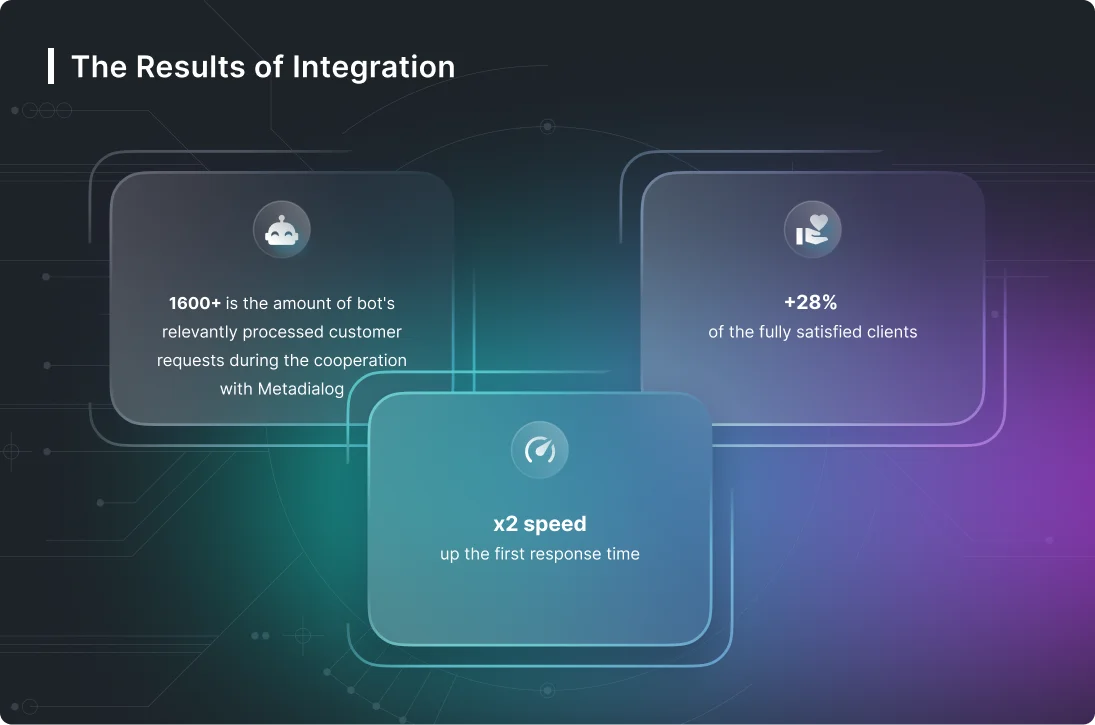
Read more about https://www.metadialog.com/ here.
- Deep image and video analysis have become a permanent fixture in public safety management and police work.
- As architectures got larger and networks got deeper, however, problems started to arise during training.
- Therefore, it is important to test the model’s performance using images not present in the training dataset.
- Unsupervised learning, on the other hand, is another approach used in certain instances of image recognition.